Summary
Google June Spam Update strengthens Google’s ability to detect spam and manipulative SEO practices without introducing new spam policies. If your website already follows Google’s guidelines and focuses on creating helpful content, there’s usually no need to change your SEO strategy overnight. Instead, use this update as an opportunity to review your website, improve content quality, and ensure your SEO practices continue to align with Google’s spam policies. In this guide, we’ll explain what changed and what both new and established websites should do next.
Introduction
Every time Google announces a new algorithm update, the same questions start appearing.
- Will my rankings drop?
- Should I delete AI-generated content?
- Do I need to rewrite my website?
- Is my business website at risk?
The reality is that not every Google update requires drastic action.
Google’s June 2026 Spam Update is designed to improve how Google identifies spam and manipulative SEO practices—not to punish websites simply because they’re new, use AI as a writing assistant, or haven’t built a large backlink profile yet.
Instead of reacting with panic, it’s more useful to understand what actually changed and whether your website needs attention.
What Changed in Google’s June 2026 Spam Update?
Google’s June 2026 Spam Update improves its ability to detect websites using manipulative SEO techniques. It is a global update that reinforces Google’s existing spam policies rather than introducing new ones.
Unlike a Core Update, this rollout specifically focuses on reducing the visibility of websites that attempt to manipulate search rankings through spammy practices.
According to Google’s official documentation, the update enhances its automated spam detection systems, including SpamBrain, to better identify websites that violate existing spam policies.
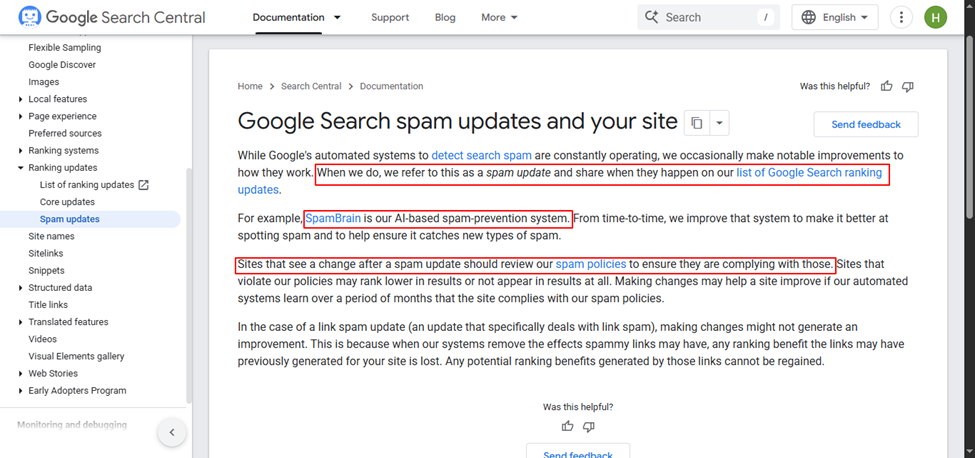
The rollout began on June 24, 2026, and Google expects it to complete within a few days, a timeline also reported by Search Engine Land. In other words, Google isn’t changing the rules—it’s getting better at enforcing them. Who Is Most Likely to Be Affected?
Websites relying on manipulative SEO tactics are more likely to be affected than websites publishing original, helpful content. The update targets practices designed to influence rankings rather than improve the user experience.
Some examples include:
- Publishing large volumes of low-value or automatically generated pages.
- Creating multiple near-identical location or service pages with very little unique content.
- Using deceptive redirects or doorway pages.
- Building unnatural backlink profiles through link schemes.
- Publishing content primarily for search engines instead of real users.
If your website exists to genuinely help potential customers solve a problem, this update is less about changing direction and more about maintaining good SEO practices.
What Should New Websites Do?
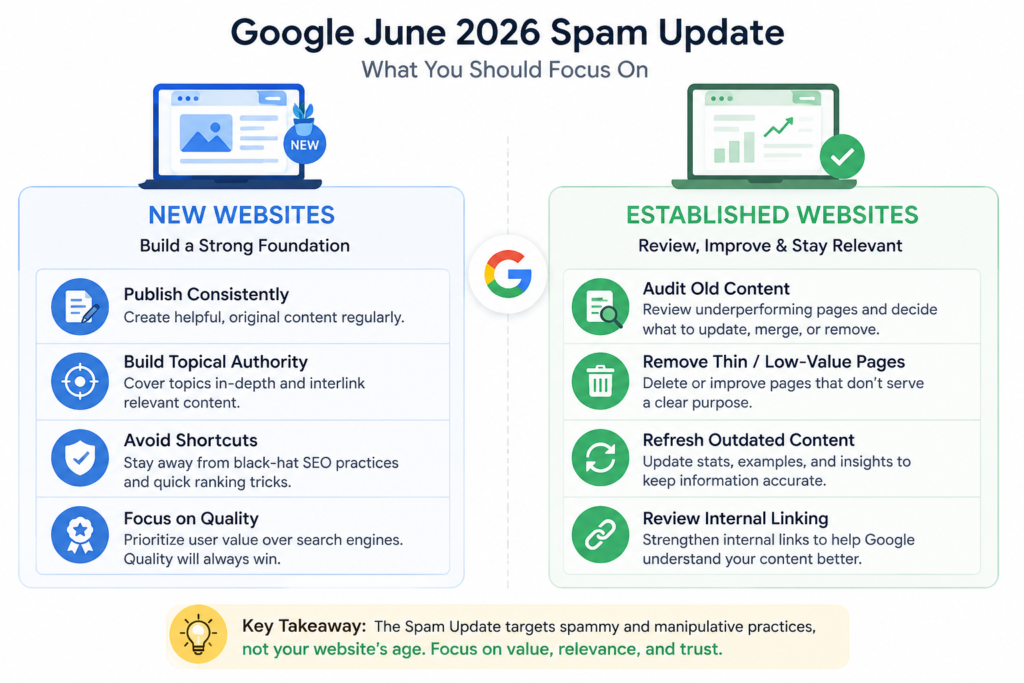
If your website is new, don’t change your SEO strategy because of this update. Instead, focus on building trust, publishing original content consistently, and avoiding shortcuts that promise quick rankings. If your website is still struggling to appear in Google Search, don’t assume this update is the reason. Our guide on Why My Website Is Not Showing on Google Yet? covers the most common causes affecting new websites.
For new websites, the biggest mistake is trying to scale too quickly. Publishing hundreds of AI-generated pages, creating dozens of location pages without unique value, or chasing backlinks before building authority can send the wrong quality signals.
Instead, focus on:
- Publishing helpful content consistently.
- Building topical authority within your niche.
- Reviewing AI-assisted content before publishing.
- Creating pages that genuinely answer users’ questions.
If you’re using AI to speed up content creation, remember that AI itself isn’t the problem—how you use it matters. We explain this in more detail in our guide on Can AI Content Rank on Google?
What Should Established Websites Do?
Established websites don’t need to start over. They should use this update as an opportunity to audit existing content and improve areas that may have become outdated or less valuable over time.
If your website already has traffic and rankings, review:
- Older blog posts that no longer provide value.
- Thin or duplicate pages.
- Internal linking between related articles.
- AI-generated content that hasn’t been reviewed or expanded.
- Pages receiving impressions but very few clicks.
Small improvements across existing content are often more valuable than publishing dozens of new articles after an algorithm update.
Absolutely. Based on everything we’ve discussed, here’s the final version. I’ve kept it concise, answer-first, business-oriented, and AI Overview friendly. I’ve also pointed out where internal links naturally fit.
Does Your Website Need Attention After Google June Spam Update?
Not every website needs major changes after Google’s June 2026 Spam Update. However, if your website has accumulated low-quality content, duplicate pages, or outdated SEO practices over time, this is a good opportunity to perform a website review and make improvements where necessary.
Rather than making immediate changes because of the update, start by evaluating your website’s current health. Ask yourself:
- Has your organic traffic dropped significantly after the rollout?
- Do you have multiple pages covering almost the same topic?
- Are older blog posts still accurate and useful?
- Have AI-assisted articles been reviewed and edited before publishing?
- Are there pages that receive impressions but very few clicks?
If you answered yes to any of these questions, your website may benefit from a content audit rather than a complete SEO overhaul.
What You Should Do
- Review your website using Google Search Console to identify pages that lost visibility.
- Refresh outdated articles instead of deleting them immediately.
- Improve thin content by adding original insights and examples.
- Review your internal linking to help users and search engines discover related content more easily.
Common Mistakes After Every Spam Update
The biggest mistake after any Google update is overreacting. Many website owners make drastic SEO changes without first understanding whether their website was actually affected.
Avoid these common mistakes:
- Deleting multiple blog posts overnight because traffic dropped.
- Buying backlinks to recover rankings quickly.
- Publishing large amounts of AI-generated content hoping to compensate for lost traffic.
- Changing URLs or website structure without a clear reason.
- Assuming every ranking fluctuation is caused by Google’s Spam Update.
Google’s search results naturally fluctuate during algorithm rollouts. Instead of making immediate changes, monitor your website’s performance over the following weeks and focus on improving content quality where needed.
What You Should Do
If your website has experienced changes, review the affected pages first. Look for opportunities to improve usefulness, update outdated information, strengthen internal linking, and better satisfy search intent before making broader SEO changes.
Conclusion
Google’s June 2026 Spam Update isn’t introducing a new SEO rulebook—it reinforces Google’s long-standing effort to reduce spam and reward websites that provide genuine value to users.
Whether your website is brand new or has been growing for years, the best long-term SEO strategy remains the same: publish helpful content, avoid manipulative tactics, review your website regularly, and focus on creating pages that genuinely solve your audience’s problems.
Instead of asking “How do I recover from this update?”, a better question is:
“Is my website genuinely helping the people I’m trying to reach?”
If the answer is yes, you’re already moving in the right direction.
Key Takeaways
- Google’s June 2026 Spam Update strengthens spam detection rather than introducing new spam policies.
- Websites relying on manipulative SEO practices are more likely to be affected than websites publishing helpful, original content.
- New websites should continue building topical authority instead of changing their SEO strategy.
- Established websites should use this update as an opportunity to review older content and improve website quality.
- Don’t panic over short-term ranking fluctuations during the rollout.
- Focus on creating useful content, maintaining a healthy website structure, and following Google’s spam policies for long-term SEO success.