
Summary:
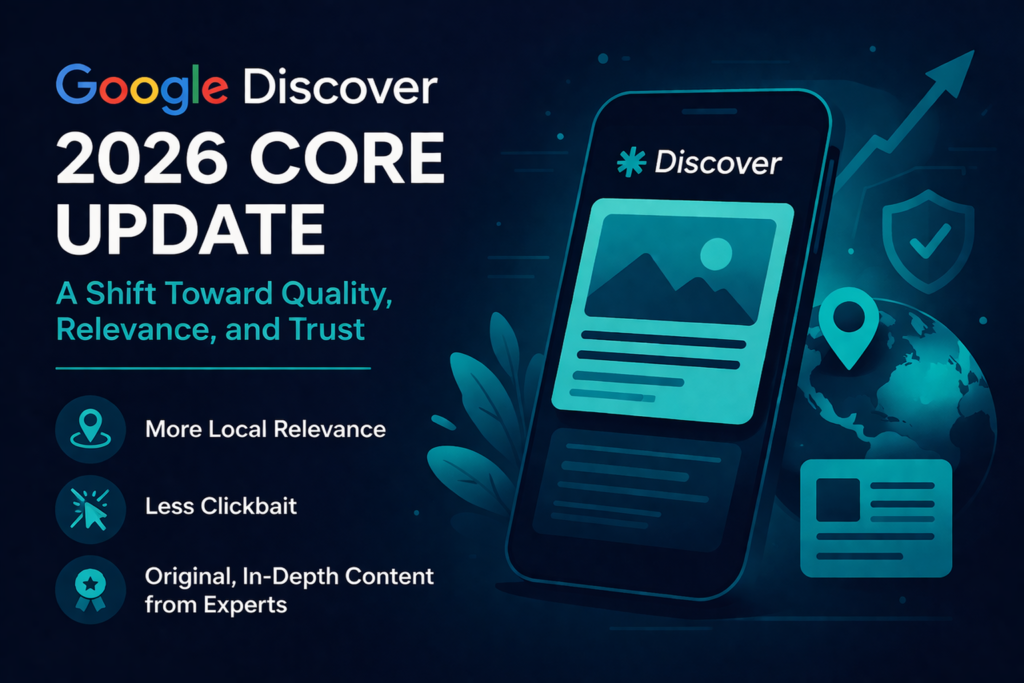
Google has introduced a February 2026 update focused specifically on Google Discover. Unlike traditional core updates, this one affects how content is recommended in the Discover feed rather than how it ranks in Search.The update prioritizes locally relevant content, reduces clickbait, and rewards original, in-depth content from authoritative sources. It began rolling out to English-language users in the United States and is expected to expand globally. Importantly, Discover traffic may fluctuate independently of Search performance, making it essential to track both separately.
A New Direction for Discover
For years, SEO has been built around search intent. Users type queries, and websites compete to rank for those queries. Discover changes that dynamic completely. It is not reactive. It is predictive.
Instead of waiting for users to search, Discover analyzes behavior, interests, and engagement patterns to decide what content should appear in a user’s feed. This means content is no longer just competing for rankings. It is competing for attention in a personalized environment.
With this update, Google is refining what qualifies as “recommendable” content. The focus is shifting away from surface-level engagement tactics and toward meaningful, trustworthy information that aligns with user interests over time.
Why This Update Feels Different
Most core updates impact search rankings directly. You see changes in keyword positions, organic traffic, and visibility across search results. This update operates in a separate layer.
Discover traffic can rise or fall without any noticeable change in your search rankings. This creates a new challenge. A site may appear stable in Search Console when looking at traditional metrics, yet experience significant volatility in Discover performance.
This separation signals a broader shift in how content is evaluated. Ranking for a keyword is no longer enough. Content must also be engaging, relevant, and authoritative enough to be recommended.
The Push Toward Local Relevance
One of the strongest signals in this update is the emphasis on local relevance. Discover is beginning to prioritize content that aligns more closely with a user’s geographic context.
This does not mean purely local businesses will benefit. It means content that reflects regional insights, examples, and context is more likely to resonate. Articles that feel globally generic may struggle to maintain visibility compared to those that incorporate location-specific relevance.
For content creators and brands, this introduces a subtle but important shift. Understanding your audience’s environment, culture, and regional concerns becomes part of content strategy, not just marketing.
The Decline of Clickbait
Another clear direction in this update is the reduction of sensational and misleading content. For years, exaggerated headlines have been used to drive clicks, especially in feed-based environments.
This update suggests that such tactics are losing effectiveness. Discover is becoming more selective about the type of engagement it values. Content that relies on curiosity gaps without delivering real value is likely to see reduced exposure.
What replaces it is a more balanced approach. Headlines still need to attract attention, but they must align closely with the content they represent. Trust becomes a ranking factor within the feed itself, not just a long-term brand signal.
A Stronger Preference for Depth and Originality
Perhaps the most important takeaway from this update is the increased emphasis on depth and originality. Discover is no longer just surfacing content that performs well. It is surfacing content that demonstrates expertise.
This means that rewritten summaries, aggregated insights, and surface-level articles may struggle to compete. Content that offers unique perspectives, real analysis, or first-hand experience is more likely to be favored.
Google’s systems are becoming better at understanding topical authority. If a website consistently produces content within a specific niche, it signals expertise. Over time, this increases the likelihood of that content being recommended.
This shift aligns closely with the broader concept of experience, expertise, authoritativeness, and trust. Discover is reinforcing these signals in a more visible and immediate way.
What This Means for Traffic Patterns
As this update rolls out, many publishers may notice unexpected changes in traffic. Some may see declines without any clear issue in their search rankings. Others may experience sudden growth.
These changes are not random. They reflect how well content aligns with the new priorities of Discover. Sites that have invested in depth, consistency, and authority are more likely to benefit. Those relying on volume or quick wins may see instability.
The key is to analyze Discover performance separately from search data. Treating them as the same channel can lead to incorrect conclusions and missed opportunities.
Rethinking Content Strategy
This update encourages a more thoughtful approach to content creation. Instead of producing isolated articles targeting individual keywords, the focus shifts toward building a cohesive body of work around a topic.
When content is connected, consistent, and clearly aligned with a niche, it becomes easier for systems to understand what the site represents. This increases trust and improves the chances of being recommended.
Original thinking also becomes a differentiator. Adding insights, experiences, or interpretations transforms content from informational to valuable. This is the type of content that stands out in a feed where users are not actively searching.
Depth plays an equally important role. Comprehensive coverage of a topic signals effort and expertise. It also increases the likelihood that content will satisfy user intent fully, which contributes to stronger engagement.
Monitoring and Adapting to Change
As the rollout continues, tracking performance becomes critical. The Discover report in Search Console provides insights into impressions, clicks, and trends specific to this channel.
Comparing Discover and Search data helps identify where changes are occurring. If traffic shifts are isolated to Discover, it indicates alignment with feed-based signals rather than traditional ranking factors.
Adapting to these changes requires patience. Unlike technical fixes, improving content quality takes time. The impact is gradual, but it is also more sustainable.
Looking Ahead
The February 2026 Discover core update represents a broader shift in how content is evaluated online. It reflects a move toward recommendation-based ecosystems where quality, relevance, and trust determine visibility.
As the update expands beyond the United States, its impact will become more widespread. Publishers who adapt early will have an advantage. Those who continue to rely on outdated tactics may find it increasingly difficult to maintain visibility.
This is not just an algorithm update. It is a signal of direction. Content is no longer just indexed and ranked. It is evaluated, understood, and recommended.
Key Takeaways
This update highlights a clear evolution in content strategy. Discover is becoming more selective, favoring content that is relevant, trustworthy, and meaningful. Traffic patterns may change independently of search rankings, making it essential to track performance separately.
The most important shift lies in how content is created. Depth, originality, and expertise are no longer optional. They are central to visibility. As Discover continues to evolve, success will depend on the ability to create content that genuinely deserves attention.
Quick Takeaways
If you want a simple way to understand this update, focus on these points:
• Discover traffic is now separate from Search performance
• Local relevance is becoming more important
• Clickbait and sensational content are losing visibility
• Original and in-depth content is being prioritized
• Authority in a niche matters more than publishing volume
• Content must be engaging enough to be recommended, not just ranked